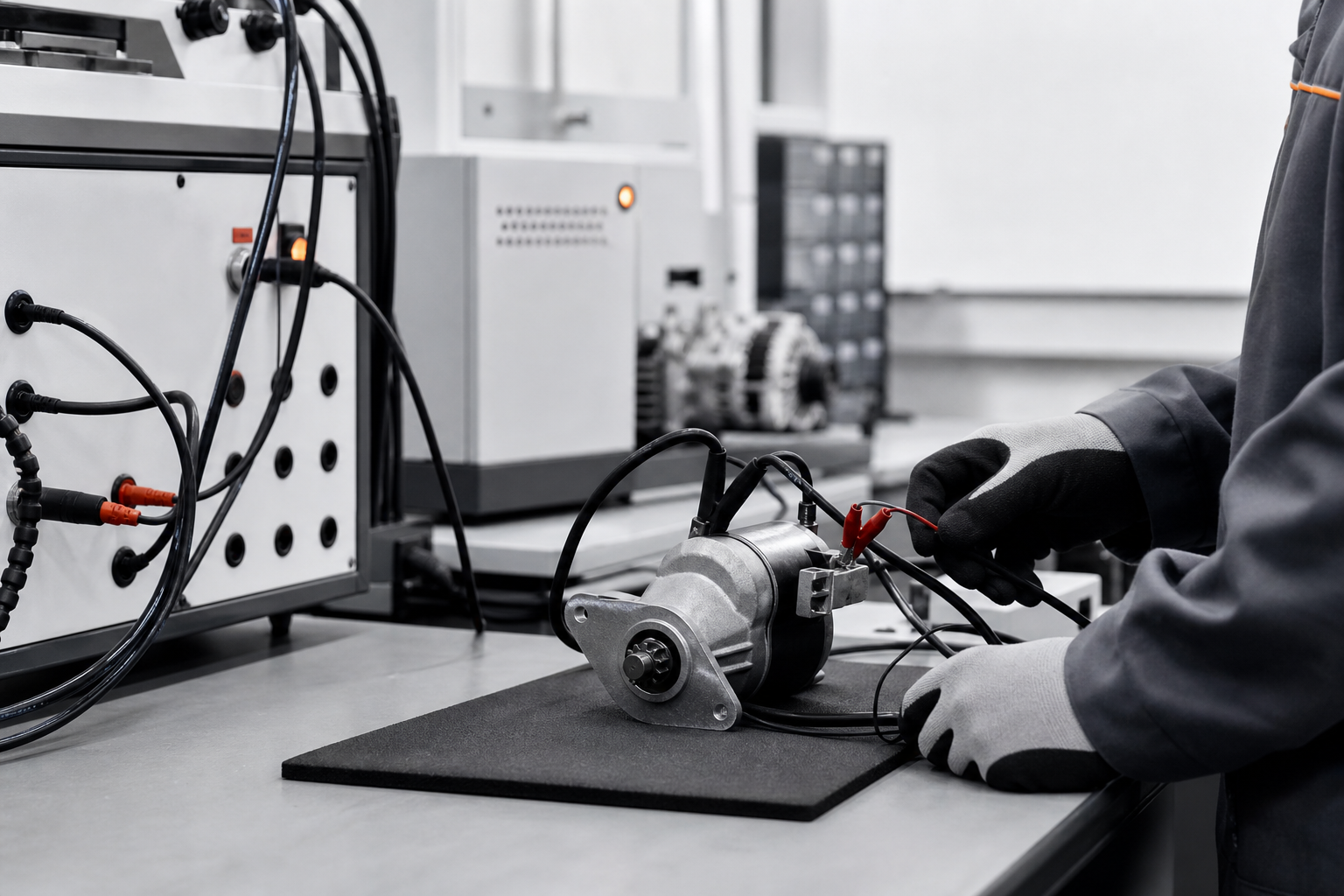
A no-crank complaint should be separated into symptoms before a replacement is selected. The starter may click once, click repeatedly, spin without engagement, crank slowly, or show no response at all. Each symptom points to a different combination of battery, wiring, solenoid, drive, relay, or starter motor causes.
Start with the power supply. Battery state of charge, cable condition, terminal tightness, and ground path determine whether the starter can receive enough current. A replacement starter installed into a weak electrical circuit may fail the same functional test as the removed unit.
Next, review the control circuit. Relay output, ignition switch signal, neutral safety switch, clutch switch, and anti-theft logic can interrupt starter operation. For procurement teams, these notes are useful because they separate an electrical diagnosis from a part-number matching issue.
When the old starter is removed, inspect the pinion, drive end, housing, solenoid terminal layout, and mounting surface. A unit that spins but does not engage may require closer attention to tooth count, drive style, and nose-cone geometry.
For a quote request, send the symptom description together with OE number, Lester number, Crankvia Part No., voltage, teeth, rotation, application, and photos. This makes the supplier response more precise than a single line saying the starter is broken.